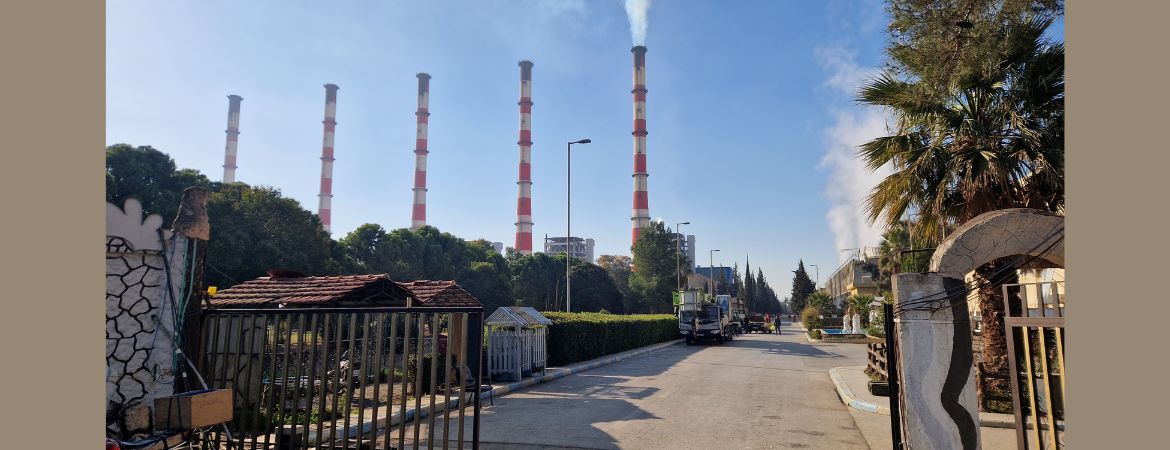
A Nation Rebuilds Its Power Systems After Years Of Conflict By contributor Haissam Chaar.
One year after the conflict ended, Syria continued to face significant damage to its energy infrastructure. In 2011, the country’s power generation capacity reached nearly 10 gigawatts. After 14 years of war, it had fallen to just 2–3 gigawatts. Roughly 30 percent of the transmission network was also destroyed, severely disrupting power distribution and grid stability.
Off-grid solar sharply increased Syria’s renewable share
In recent years, photovoltaic systems paired with battery storage became increasingly common across the country. While their capacity remained limited, typically powering only essential household or industrial loads, these off-grid setups unexpectedly boosted the share of renewable energy in Syria’s electricity mix, positioning it among the highest in the region. The next logical step would be gradually integrating this installed capacity into the national grid through bidirectional electricity meters.

To help close the generation gap and meet rising demand, the Syrian Ministry of Energy signed a major concession contract with an international consortium led by Qatar’s UCC Holding to build and operate eight power plants totaling 5 gigawatts. Valued at $7 billion, the deal marked an important move toward a sustainable, public-private development model. In addition, Saudi Arabia’s ACWA Power signed a joint development agreement with the Syrian government to explore roughly 2.5 gigawatts of solar and wind capacity, including detailed studies of existing plants and the national grid.
International approvals delay major reconstruction project timelines
Large-scale investment remains essential for reconstruction, yet executing such projects is still fraught with challenges. The lingering effects of former sanctions continue to slow progress. International companies often need months for internal approvals, risk assessments, and compliance procedures. Before any project can begin, feasibility studies, financing structures, and regulatory frameworks must be aligned.

Major projects also depend on extensive subcontractor networks. Supply chains inside Syria must be rebuilt, logistics re-established, and industrial capacity expanded. Local contractors, materials, equipment, and skilled labor all require renewed support. During the conflict, the country’s B2B sector contracted sharply due to a lack of investment. Many specialized firms faced severe brain drain and were forced to pivot toward consumer goods or simpler services just to survive. Even a year after the conflict’s end, this retail-focused mindset still dominated the market.
Diaspora talent is key to rebuilding human capacity
Human capacity building will be pivotal in overcoming these systemic gaps. Engineers, technicians, and managers require additional training in governance, teamwork, empowerment, and critical thinking to effectively support reconstruction efforts. Syria’s young population shows a strong eagerness to learn, and the Syrian diaspora includes many highly qualified professionals willing to contribute. Their involvement is already growing as new working groups form across multiple sectors.
After more than five decades of political and economic isolation, Syria is beginning to open its doors. This creates a rare opportunity for early investment and long-term strategic partnerships. Among the early pioneers are Saudi Arabia and Qatar, both recognizing the country’s reconstruction potential and actively engaging in its energy transformation.