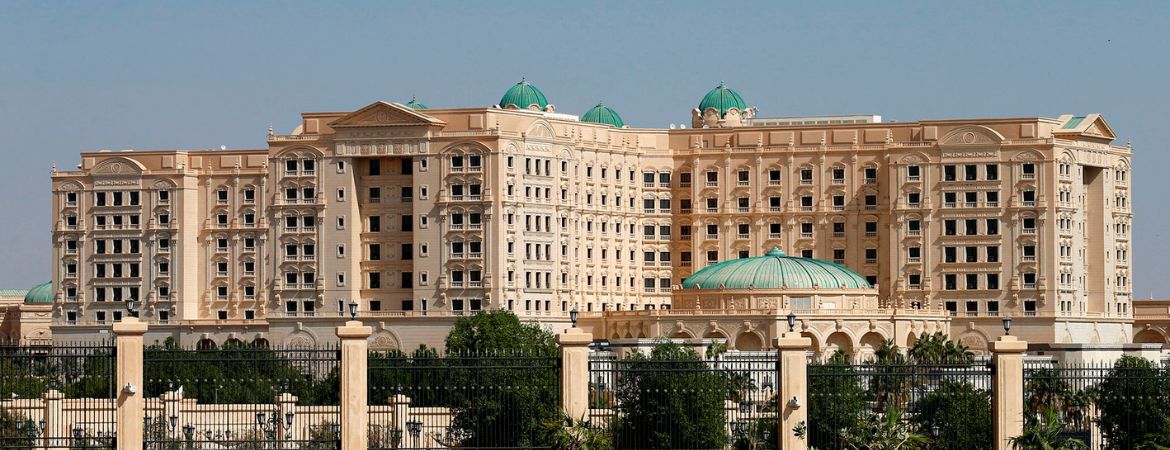
Rising imports drive demand from construction, hospitality and infrastructure through ANIET’s Portuguese Stone initiative.
Portuguese exports of natural stone to Saudi Arabia are gaining momentum in one of the world’s most dynamic markets for real estate investment, infrastructure, hospitality, and urban development. Through the project “Portuguese Stone – The Natural Path”, ANIET, the Portuguese Association of the Extractive and Processing Industry aims to turn this momentum into market share, positioning Portugal’s offer as a premium response to a Saudi development cycle that requires scale, differentiation, and supply reliability.
Portuguese stone enters the market with clear commercial strengths
The figures confirm the potential. In 2024, Portuguese sales of Natural Stone to the Kingdom reached EUR 7.83 million, 26.41% more than in 2023. By November 2025, exports had already reached EUR 8.01 million, up 10.71% year-on-year. In a country where construction carries significant economic weight, and where investment pressure is increasingly shifting towards non-oil sectors, Portuguese stone enters the market with clear commercial strengths: quality, industrial reliability, and the capacity to respond to demanding projects.
Noble materials, bespoke solutions, consistency of supply
This market rationale underpins ANIET’s promotional drive. Rather than competing on price alone, Portuguese Natural Stone enters the Saudi market through value: noble materials, bespoke solutions, consistency of supply, and the capacity to serve segments where aesthetics and longevity are decisive from high-end real estate to luxury hospitality, public facilities, and major mobility platforms.
The Portuguese presence in completed projects in the Kingdom helps consolidate this commercial narrative. Rosa Aurora marble was used in the interiors of Saudi Royal Family palaces, including Al Yamamah Palace. The Ministry of Agriculture and Rural Affairs building in Riyadh incorporated around 5,000 square meters of Portuguese granite flooring. At King Khalid International Airport, Portuguese stone was applied in a custom-cut geometric design. At the Jeddah station of the Makkah-Madinah High-Speed Railway, Portuguese suppliers took part in a project requiring around 170,000 square meters of high-resistance stone flooring. In the hotel segment, The Ritz-Carlton Riyadh used Portuguese Branco Nevada limestone for the exterior cladding of its façades.

“Saudi Arabia is redesigning its built landscape with ambition, scale, and exacting standards. Portuguese Natural Stone has exactly what this new cycle requires: lasting beauty, technical performance, and the ability to turn architectural vision into built matter. When we look at examples already completed in the Kingdom, it becomes clear that Portugal does not arrive in this market as an abstract promise: it arrives with completed work, industrial competence, and proven technical expertise,” says Francelina Pinto, Director-General of ANIET.
For ANIET, the objective is clear: to turn awareness into business and strengthen the presence of the Portuguese stone value chain in a market where demand for high-added-value materials is expected to continue growing. With the project Portuguese Stone, The Natural Path, the association seeks to expand recognition of Portuguese stone among Saudi specifiers, developers, architects, and interior designers, public decision-makers, and private operators, at a time when the Kingdom continues to open space for signature construction solutions.
FOR MORE INFORMATION: