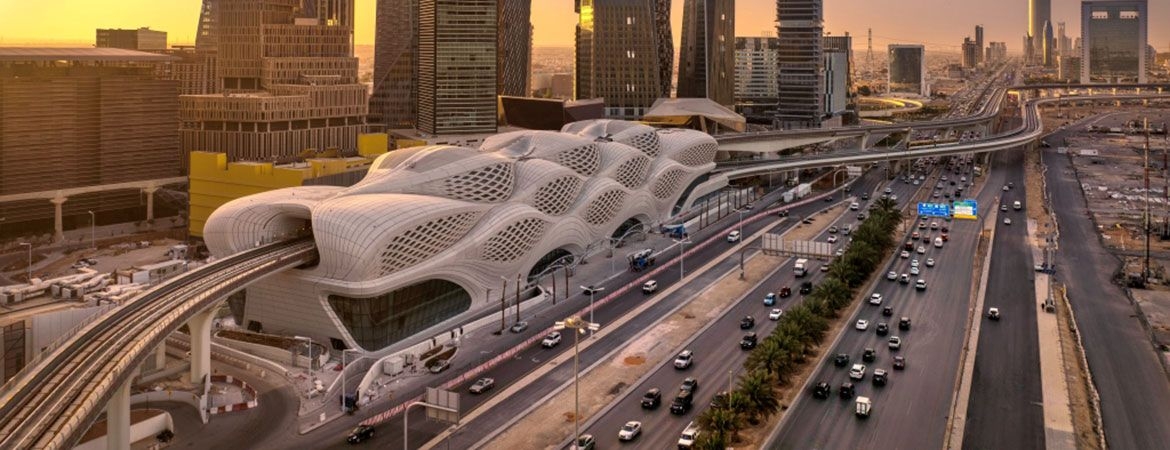
Engineering World-Class Mobility Solutions Transforming Saudi Arabia’s Transport Future.
As Saudi Arabia accelerates its Vision 2030 ambitions, world-class transportation infrastructure has become one of the Kingdom’s defining priorities. Among the engineering firms helping to reshape urban mobility is AtkinsRéalis, a global engineering, design, project management, and professional services company with more than 100 years of international experience and a longstanding presence across the Middle East.
Delivering some of the region’s most complex transport infrastructure
Operating throughout Saudi Arabia, the UAE, Qatar, Bahrain, Oman, Kuwait, and Egypt, AtkinsRéalis has played a pivotal role in delivering some of the region’s most complex transport infrastructure, including the Riyadh Metro, Dubai Metro, Etihad Rail, Qatar Rail, and Saudi Arabia Railways. The company combines strategic advisory, engineering, digital design, systems integration, project management, and operations support to deliver transportation networks that are not only technically advanced but also sustainable and resilient.
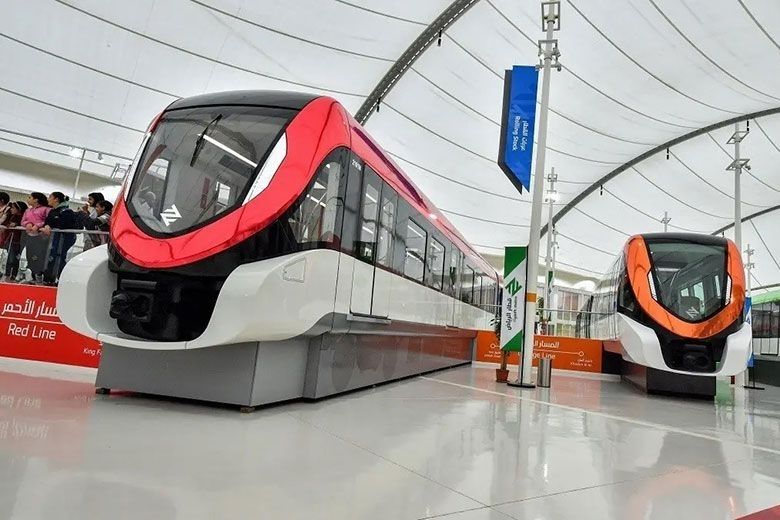
Among these landmark projects, none better illustrates the company’s contribution to Saudi Arabia’s future than the Riyadh Metro, one of the largest fully automated metro systems ever constructed and a flagship infrastructure project supporting the Kingdom’s economic diversification.
Engineering a New Era of Mobility
The Riyadh Metro forms the backbone of the King Abdulaziz Public Transport Project and represents a transformational investment in Saudi Arabia’s capital city. Designed to address rapid population growth and increasing congestion, the metro provides residents and visitors with a fast, reliable, and environmentally sustainable alternative to private vehicle travel.
The completed network comprises six fully automated metro lines spanning approximately 176 kilometers and serving 85 stations, making it one of the world’s largest driverless metro systems. Since becoming fully operational, the network has dramatically improved connectivity between residential communities, business districts, educational institutions, government facilities, and major destinations throughout Riyadh.
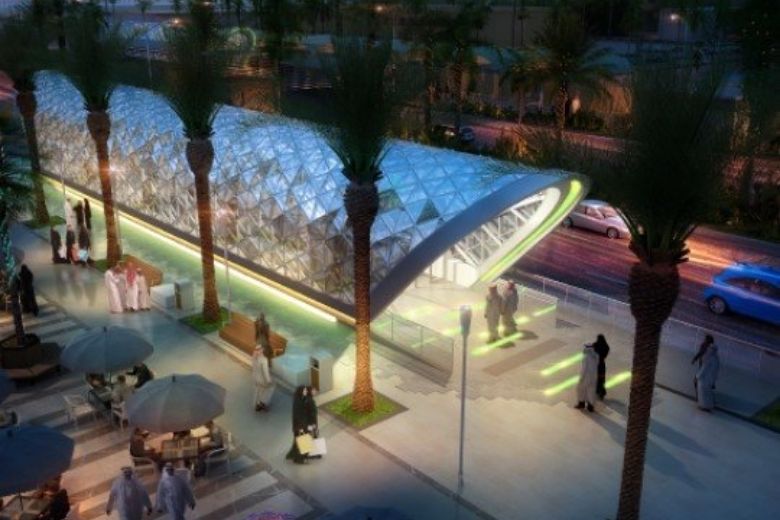
AtkinsRéalis played a significant role in the project, leading the design of three metro lines, the Yellow, Green, and Purple Lines, while also delivering program management and supervision services for operations and maintenance on behalf of the Royal Commission for Riyadh City. The company’s multidisciplinary teams integrated planning, engineering, systems assurance, digital technologies, and operational readiness to help deliver one of the most technically demanding transportation projects in the world.
Digital Engineering at the Core
One of the defining features of AtkinsRéalis’ approach is its use of advanced digital engineering throughout the project lifecycle.
Using Building Information Modeling (BIM), Autodesk platforms, digital coordination tools, and systems integration processes, project teams were able to coordinate thousands of engineering interfaces across stations, tunnels, elevated viaducts, rolling stock systems, utilities, and operational infrastructure. This digital-first methodology improved design quality, minimized construction risks, enhanced collaboration between stakeholders, and supported efficient long-term asset management.
The company believes that digital engineering is becoming fundamental to the future of transportation infrastructure across the Gulf, allowing increasingly complex projects to be delivered with greater precision, safety, and operational reliability.
Shaping the Future of Middle East Mobility
Beyond Riyadh, AtkinsRéalis views transportation as the foundation upon which future cities will grow.
Across the Gulf, major investments in rail and metro infrastructure including Dubai Metro, Etihad Rail, Qatar Rail, Saudi Arabia Railways, and the Riyadh Metro, are transforming how people, goods, and economies connect. Rather than viewing transportation solely as infrastructure, AtkinsRéalis sees integrated mobility networks as strategic assets that support economic diversification, improve resilience, reduce congestion, and enhance quality of life.
As Campbell Gray, CEO of AtkinsRéalis Middle East & Africa, explains: “Mobility is no longer about getting from point A to point B. It is becoming the foundation for how cities grow, how economies function, and how communities stay connected.”
Belal Deiranieh, Senior Vice President – Transportation, Middle East, also highlights the next phase of regional development: “The next frontier is regional connectivity. Cross-border freight and high-speed passenger corridors will fundamentally change how the GCC moves goods and people.”
These observations align closely with Saudi Arabia’s Vision 2030 ambitions, where transportation infrastructure is expected to stimulate investment, create employment opportunities, improve sustainability, and support entirely new economic districts.
Supporting Saudi Arabia’s Vision 2030
The Riyadh Metro is far more than a transportation project, it represents a shift in how Saudi cities will function for decades to come. By reducing reliance on private vehicles, lowering emissions, improving accessibility, and integrating with wider public transport systems, the network is laying the foundation for a more connected and sustainable capital.
For AtkinsRéalis, the project also demonstrates its ability to deliver complex infrastructure programs that combine engineering excellence with digital innovation and operational expertise. As Saudi Arabia continues investing in rail, metro, and mobility projects, the company remains well positioned to support the Kingdom’s long-term transportation transformation.
FOR MORE INFORMATION: