Diversification and local manufacturing position the company for its next growth phase.
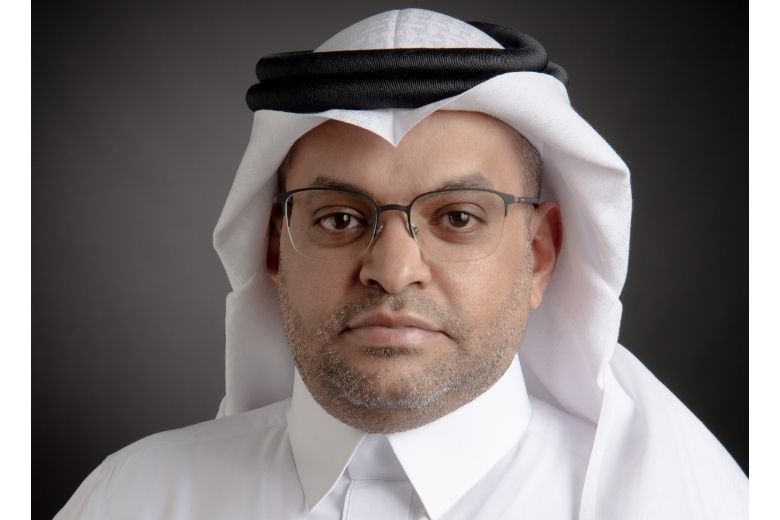
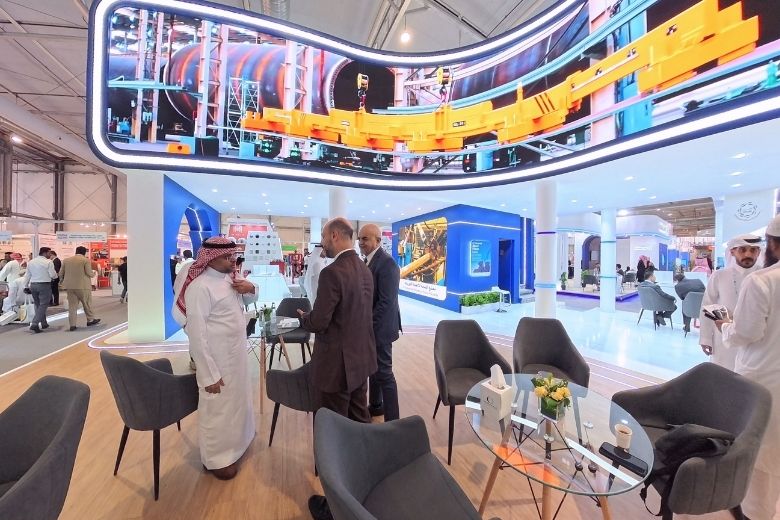
For over three decades, Al Yamamah Steel Industries has played a pivotal role in Saudi Arabia’s industrial development. Today, the company is expanding beyond its construction roots to become a key player in electricity and renewable energy. At Big 5 Construct Saudi Arabia, Saudi Projects Director and dmg events media partner Waseem Asmar spoke with CEO Sahal Mekhdar Al-Thobaiti about the company’s growth journey, major project contributions and strategic priorities for the years ahead.
SAUDI PROJECTS: Can you briefly introduce Al Yamamah Steel and its core areas of business?
SAHAL MEKHDAR AL-THOBAITI: Al Yamamah Steel Industries is a Saudi publicly listed industrial company with a track record dating back to 1989. Today, we serve three strategic sectors: construction, electricity and renewable energy.
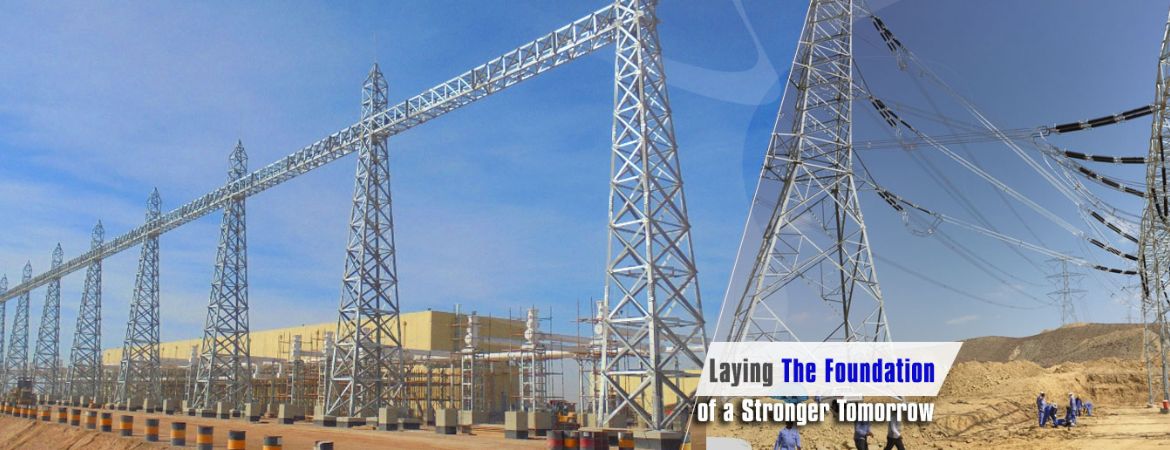
Our construction portfolio includes welded steel tubes, hollow sections and reinforcing steel bars. In electricity, we manufacture outdoor lighting poles and fixtures, power-distribution poles, high masts and lattice towers for power transmission and telecommunications. We also operate dedicated manufacturing capabilities for solar and wind energy.
With facilities in Jeddah, Dammam and Yanbu, we serve customers across Saudi Arabia and selected regional markets. Our ambition is to support infrastructure development while strengthening local manufacturing and supply-chain resilience.
SAUDI PROJECTS: How has the company evolved since its establishment?
SAHAL MEKHDAR AL-THOBAITI: Our evolution has closely followed the changing needs of Saudi Arabia.
We started with a primary focus on construction products and gradually expanded our manufacturing capabilities, geographic footprint and product portfolio. We then established a strong position in the electricity sector before entering renewable energy, including solar structures and wind towers.
Becoming a publicly listed company was another significant milestone, strengthening our governance, transparency and ability to pursue sustainable growth.
The result is a transformation from a construction-focused manufacturer into a diversified industrial company with capabilities across three strategic sectors.
SAUDI PROJECTS: What sets Al Yamamah Steel apart?
SAHAL MEKHDAR AL-THOBAITI: It is the combination of experience, diversification, local manufacturing and adaptability.
We are not focused on a single product or market. Our capabilities allow us to support projects ranging from buildings and infrastructure to electricity transmission, grid expansion, solar energy and wind power.
Our 35-plus years of experience have also given us a deep understanding of the Saudi market and its technical requirements. Our manufacturing footprint in Jeddah, Dammam and Yanbu provides both scale and flexibility.
Perhaps most importantly, we are prepared to invest in emerging opportunities. Our expansion into renewable energy demonstrates our ability to turn changing market requirements into new local industrial capabilities.
SAUDI PROJECTS: Where are you seeing the strongest demand today?
SAHAL MEKHDAR AL-THOBAITI: Electricity and renewable energy are currently showing particularly strong momentum.
Demand for transmission towers remains high as Saudi Arabia continues expanding and reinforcing its power grid and connecting new generation capacity, industrial developments and major infrastructure projects.
We are also seeing sustained demand for distribution poles, lighting poles and high masts as cities, transport networks and new developments expand.
Renewable energy is another significant growth area. The Kingdom’s growing solar and wind pipeline is creating new opportunities for locally manufactured components, particularly solar structures and wind towers.
Construction remains an important foundation for the business, with continuing demand for steel tubes, hollow sections and reinforcing bars.
SAUDI PROJECTS: Which major Saudi projects have you contributed to?
SAHAL MEKHDAR AL-THOBAITI: We have contributed to a broad range of strategic infrastructure projects, particularly in electricity transmission and renewable energy.
In the electricity sector, we have supplied transmission towers for major 380 kV and 500 kV projects across the central, eastern and western regions of the Kingdom. These projects are helping expand and reinforce the national grid while supporting new communities, industrial developments and power-generation capacity.
In renewable energy, we have supplied wind towers for major projects including the Al Ghat, Waad Al-Shamal and Yanbu wind farms.
These projects are particularly important because they demonstrate the growing capability of Saudi manufacturers to deliver complex, high-specification components for the Kingdom’s emerging renewable-energy industry.
SAUDI PROJECTS: How important is local manufacturing to your customers?
SAHAL MEKHDAR AL-THOBAITI: It has become increasingly important.
For customers, local production provides shorter lead times, greater supply certainty and faster responses to changes in technical requirements or project schedules. It also reduces exposure to international shipping disruptions and global market volatility.
But the value goes beyond logistics. Local manufacturing increases local content, develops national industrial expertise and retains more economic value within Saudi Arabia.
For our partners, working with an established Saudi manufacturer also helps them meet localization commitments and deliver major projects in line with Vision 2030.
SAUDI PROJECTS: How is Al Yamamah responding to the renewable-energy opportunity?
SAHAL MEKHDAR AL-THOBAITI: We are building dedicated manufacturing capabilities for renewable energy rather than simply treating it as an extension of our conventional business.
In solar, we manufacture structures and components supporting solar tracking systems. In wind energy, we have developed specialized capabilities for large-scale wind towers, which require precision manufacturing, rigorous quality control and the ability to handle components of considerable size and complexity.
Our involvement in the Al Ghat, Waad Al-Shamal and Yanbu wind projects demonstrates our readiness to serve this market.
We are also engaging with developers, turbine manufacturers, EPC contractors and technology partners so we can understand future requirements and align our manufacturing capabilities accordingly.
SAUDI PROJECTS: What are your priorities for the next three to five years?
SAHAL MEKHDAR AL-THOBAITI: Our objective is sustainable, profitable growth while strengthening our position as a strategic industrial partner to Saudi Arabia.
Renewable energy will be a major focus, particularly wind towers and solar structures. At the same time, we will continue strengthening our electricity business as the national grid expands.
We also remain committed to improving the competitiveness of our established construction business through greater efficiency, an optimized product mix and stronger market responsiveness.
Operational excellence will be critical. We will continue investing in automation, digitalization, quality systems and cost efficiency while maintaining disciplined capital allocation.
We will continue to invest in our people because sustainable industrial growth requires skilled teams, strong leadership, and a culture of accountability and continuous improvement.
SAUDI PROJECTS: What is the most important leadership lesson you have learned?
SAHAL MEKHDAR AL-THOBAITI: Adaptability must always be matched by discipline.
Industrial markets constantly change. Demand cycles shift, costs fluctuate, technology evolves and new sectors emerge. A successful company must respond to these changes while maintaining strategic clarity, operational control and disciplined investment.
I have also learned that strategy alone is never enough. Execution ultimately depends on people, their experience, commitment and willingness to take responsibility.
Our approach at Al Yamamah Steel is therefore straightforward: remain ambitious about the future, realistic about risks and disciplined in turning opportunities into sustainable results.
FOR MORE INFORMATION: