Strategic partners are helping turn promising GCC ideas into viable businesses.
A great idea is only the beginning. Turning that idea into a viable business requires structure, expertise, mentoring, resources and, above all, the discipline to execute.
Ideas Made Real (IMR) is a structured entrepreneurship program for GCC nationals aged 18-30, extending to 35 by exception. More than a pitch competition, IMR identifies aspiring entrepreneurs with the commitment, coachability and potential to build successful businesses.
Partner support is fundamental to that journey
IMR progresses from an open application and independent assessment to 50 shortlisted candidates, with the strongest 20 advancing into mentorship and refinement before five finalists are selected for prototype development and the GCC showcase.
Expert partners provide resources, guidance and capabilities for growth (include links)
Avela Global provides venture architecture and hands-on prototype development, helping finalists move from concept towards tangible products and practical proof. Vistage UAE brings leadership, mentoring and business expertise, while STRATEGISE™ provides a practical framework for turning strategy into structured plans, financial thinking and disciplined execution. tpg.media contributes branding, PR and marketing support to help build professional market presence. This is why IMR sees partnership as more than traditional sponsorship.
Partners provide expertise, networks and opportunities that drive entrepreneurial growth
Partners are not simply supporting an event; they are contributing expertise, resources, networks and opportunities that can directly influence the development of emerging entrepreneurs. They can also engage with carefully selected founders through the wider entrepreneurial ecosystem, creating opportunities for future relationships, pilots, partnerships and growth.
The model is designed to maintain integrity throughout the process. Applications are independently reviewed, while the programme’s published evaluation framework considers team capability and coachability alongside innovation, impact, feasibility and execution.
The support also extends beyond the showcase. The IMR champion receives a year of post-award support spanning areas including legal and IP, continued prototype development, PR and media, financial frameworks and Vistage CEO mentorship.
Sponsorship by developing tomorrow’s business leaders
For organizations, the opportunity is not simply to support entrepreneurship, but to help build the capabilities, confidence and commercial readiness of the next generation of GCC founders.
As the region continues to develop diversified, knowledge-driven economies, programs such as Ideas Made Real provide an important bridge between entrepreneurial ambition and practical execution.
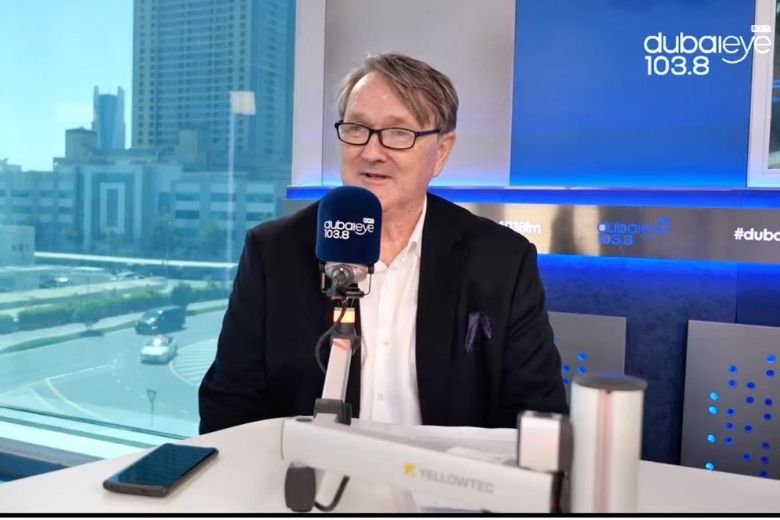
Saudi Projects interviews Simon Lewis, Founder and CEO of STRATEGISE™ and a VISTAGE Chair for Vistage UAE, on the role of strategic partnerships in driving business success. From leadership and collaboration to creating tangible outcomes, Simon explains how genuine support can turn partnerships into powerful engines for growth and lasting impact.
SAUDI PROJECTS: You have extensive experience working with CEOs, business leaders and entrepreneurs. What have those experiences taught you about what it really takes to build and grow a successful business?
SIMON LEWIS: After 35 years working in the Middle East, and through my work with CEOs, entrepreneurs and leadership teams, I have learned that successful businesses are rarely built on the idea alone. They are built on the quality of the execution.
You need to be very clear about the problem you are solving, who is prepared to pay for the solution, and why they should choose you rather than somebody else. From there, it comes down to focus, financial discipline, leadership and the ability to execute consistently.
I also believe successful founders learn quickly. They listen to customers, challenge their own assumptions and are prepared to change direction when the evidence tells them to.
An entrepreneur needs vision, but vision without execution remains an idea. The businesses that succeed are those that turn that vision into measurable actions, remain close to their customers and keep moving forward.
SAUDI PROJECTS: What are the most common mistakes you see entrepreneurs make when moving from an idea to a commercial business?
SIMON LEWIS: One of the biggest mistakes is falling in love with the idea rather than the customer problem.
Entrepreneurs can spend months developing a product before establishing whether enough customers actually want it, whether they will pay for it and whether the economics work.
The second mistake is trying to do too much. They add features, target multiple markets and pursue every opportunity. Early-stage businesses normally need the opposite: a clearly defined customer, a compelling proposition and a very focused route to market.
The third is underestimating cash flow. Revenue, profit and cash are very different things, and young businesses need to understand all three.
Finally, many founders think having a business plan means they have a business. The real test is whether you can convert the plan into customers, revenue and repeatable execution.
SAUDI PROJECTS: Through Vistage UAE and STRATEGISE™, you work closely with senior business leaders. How has this experience shaped your approach to mentoring emerging entrepreneurs?
SIMON LEWIS: Working with senior leaders through Vistage UAE and developing STRATEGISE™ has reinforced one important principle for me: good mentoring is not about giving somebody all the answers. It is about helping them make better decisions.
That is particularly important with emerging entrepreneurs. I want them to understand why they are making a decision, what assumptions sit behind it and what evidence will tell them whether they are right or wrong.
I therefore use questions extensively. Who is your customer? What problem are you solving? Why will they buy? What will it cost to acquire them? What makes you different? What has to be true for this business to succeed?
I also want entrepreneurs to become comfortable being challenged. Business leadership can be lonely, and one of the most valuable things a mentor can provide is an independent perspective that combines encouragement with commercial realism.
SAUDI PROJECTS: What specific knowledge or expertise will you bring to the Ideas Made Real winners that they may not gain from a traditional entrepreneurship program?
SIMON LEWIS: I think the difference is practical commercial experience.
I have spent 35 years working in the Middle East, building businesses, advising CEOs and leadership teams, developing strategy and helping organisations execute it. Through 3D ACTIO and STRATEGISE™, my work sits at the intersection of strategy, leadership and execution.
So with the Ideas Made Real winners, I will not just be discussing theoretical business models. We can work through the real decisions involved in building a company: positioning, customer validation, pricing, commercialisation, cash flow, go-to-market strategy, partnerships, leadership and growth.
I can also bring a regional perspective. Building a business in the GCC has its own dynamics, and relationships, culture, market structures and decision-making processes matter.
Ideas Made Real is ultimately about turning ideas into real businesses. My role is to help entrepreneurs make that transition.
SAUDI PROJECTS: When you assess an entrepreneur, what qualities tell you that someone has the potential to build a sustainable and scalable business?
SIMON LEWIS: I look for much more than confidence or presentation skills.
Curiosity is important. Strong entrepreneurs ask questions and want to understand their customers and their market. Resilience matters because building a business inevitably involves setbacks.
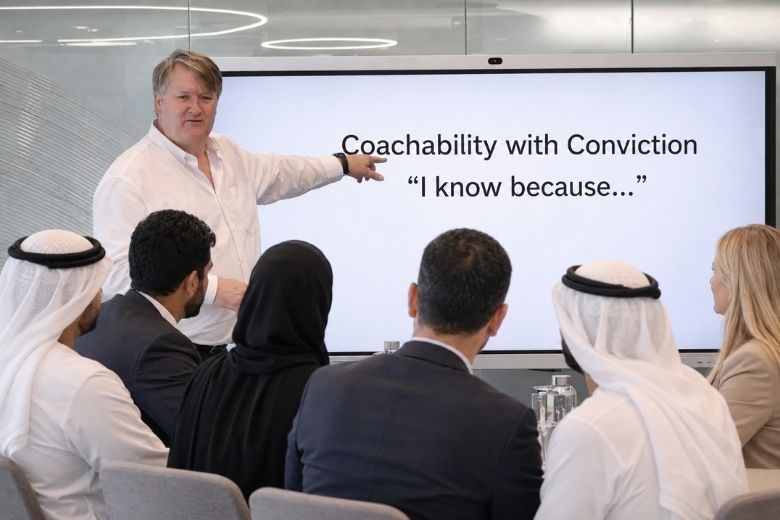
I also look for what I would call coachability with conviction. A founder needs to believe strongly in what they are building, while still being prepared to listen, test assumptions and change direction when the evidence demands it.
Execution is another major indicator. I am always interested in what someone has actually done rather than simply what they intend to do.
And finally, I look for ambition combined with realism. Can they see a bigger opportunity while remaining disciplined about the next step?
You can develop financial and strategic knowledge. It is much harder to teach determination, personal responsibility and the willingness to keep learning.
SAUDI PROJECTS: How do you help entrepreneurs challenge their assumptions and look at their business ideas from a more commercial perspective?
SIMON LEWIS: I try to move the conversation from “I believe” to “I know because…”
Every business idea contains assumptions. We identify the most important ones and then ask how they can be tested.
An entrepreneur may tell me, for example, that everybody will want their product. My response would be: who specifically? What problem does it solve for them? What are they doing today instead? What will they pay? How many potential customers have you spoken to?
We then look at the commercial mechanics. Revenue model, pricing, margins, customer acquisition, competition, cash requirements and scalability.
STRATEGISE™ has reinforced this structured approach in my own work: understand the business, understand the market, make clear strategic choices and then translate those choices into action.
The objective is not to destroy somebody’s enthusiasm. It is to turn enthusiasm into a commercially credible proposition.
SAUDI PROJECTS: What practical areas do you expect to focus on with the Ideas Made Real winners, including strategy, business models, leadership, commercialisation and growth?
SIMON LEWIS: The starting point will be turning the idea into a clear commercial proposition: what problem are we solving, for whom, and why does our solution deserve to exist?
From there, we can build the business model around it—customer segments, pricing, routes to market, competitive differentiation, partnerships and financial viability.
Commercialisation will be critical. How do we move from prototype to customer? Who should the first customers be? How do we demonstrate value, generate early revenue and create evidence that the concept can scale?
Leadership will be equally important because as the business grows, the founder’s role changes. Eventually you have to lead people rather than simply manage the idea.
And we will focus heavily on execution. I want every winner to leave our discussions with clear priorities, measurable actions and accountability for what happens next.
SAUDI PROJECTS: What do you believe will be the greatest value you can add to the winners during their journey with Ideas Made Real?
SIMON LEWIS: Probably helping them shorten the learning curve.
Entrepreneurs will inevitably make mistakes, that is part of building a business. The opportunity is to avoid making the expensive mistakes that somebody else has already made.
I can bring 35 years of commercial experience in the Middle East, exposure to leaders across many industries, the strategic methodology we have developed through STRATEGISE™, and the lessons I continue to learn from working with CEOs through Vistage.
But my greatest value should ultimately be in the questions I ask.
If I can help an entrepreneur see a risk earlier, identify a better opportunity, make a stronger commercial decision or have the confidence to change direction, then the mentoring has created value.
For me, success would be seeing these young entrepreneurs move beyond simply having a great idea and develop the judgment, discipline and leadership capability required to build something sustainable.
Organizations interested in becoming an Ideas Made Real partner can learn more at: