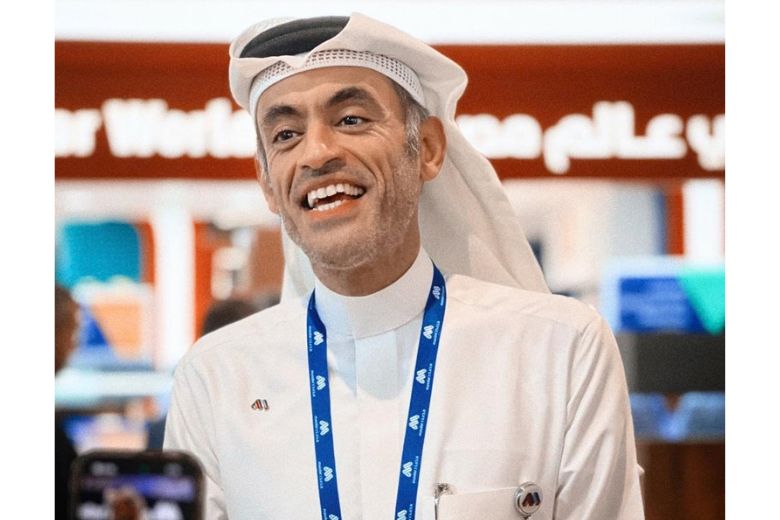
Faisal Al Muhaideb outlines Masdar’s strategy for supply, sustainability and localization.
Saudi Arabia’s construction sector is entering a period of sustained activity as major Vision 2030 developments move from planning into delivery. For building materials suppliers, this growing pipeline is creating new requirements around availability, logistics, product performance, sustainability and localization.
At Big 5 Construct Saudi 2026 in Riyadh, Waseem Asmar, Director of Saudi Projects, spoke with Faisal Al Muhaideb, CEO of Masdar, about the company’s role in supporting the Kingdom’s construction ambitions.
With more than 25 years of experience across building materials trading, distribution and industrial roles, Al Muhaideb shared his perspective on market demand, supply chain development, sustainable products, smart solutions and the opportunities for Saudi-based manufacturing.
The conversation also explored Masdar’s three strategic priorities through 2030: supporting Saudi Arabia’s building and construction sector, enhancing the customer experience and localizing supply chains within the Kingdom.
SAUDI PROJECTS: How is Masdar supporting Saudi Arabia’s rapidly expanding construction and infrastructure pipeline today?
FAISAL AL MUHAIDEB: If we look at the Saudi economy today, the building and construction sector represents around SAR 420 billion, demonstrating the scale of demand in the market.
Of that figure, almost SAR 220 billion relates to steel, aluminum, glass, flooring and other materials. This requires a supply chain capable of meeting demand every day and across the Kingdom.
Masdar has strong supply chain capabilities. We operate branches across Saudi Arabia, while our online operations efficiently cover 29 cities. This gives us the ability to serve customers across different locations and respond to the requirements of a rapidly developing market.
SAUDI PROJECTS: What role is Masdar playing in supplying the Kingdom’s giga projects and major developments?
FAISAL AL MUHAIDEB: When you look at the Kingdom and the projects underway, there is a great deal happening across the country.
Our role is to maintain dedicated teams throughout the Kingdom that can sell and supply products according to the requirements of each project. This includes standard supply as well as contracted supply, and standard materials as well as customized items.
The important thing is having the people, products and capabilities available where the projects need them.
SAUDI PROJECTS: How has demand for building materials evolved as Vision 2030 projects move from planning into delivery?
FAISAL AL MUHAIDEB: Today, I believe we are living through the golden age of Saudi Arabia’s construction sector.
We have wise leadership, a clear vision, a supporting government and a stable monetary policy. Those four pillars have come together at the same time and created this level of demand.
FAISAL AL MUHAIDEB: Today we have three main goals within Masdar, and that is our strategy from now until 2030.
Goal number one is to support the building and construction sector in Saudi Arabia and help achieve Vision 2030.
The second goal is to enhance the customer experience when shopping for building materials.
The third goal is to localize supply chains within the Kingdom.
Those three goals will guide us from now through to the end of the decade.
“We have three main goals within Masdar.”
SAUDI PROJECTS: How is Masdar strengthening its supply chain and logistics capabilities to meet increasingly complex project requirements?
The demand has evolved as projects have progressed, and we believe growth is going to be very strong over the coming five to seven years.
SAUDI PROJECTS: With 105 outlets across 29 cities, what are Masdar’s priorities for further expansion across Saudi Arabia?
FAISAL AL MUHAIDEB: When we look at projects, we see challenges in supply, but we also see opportunities. We see challenges in geography and opportunities there. We see challenges in standardization and we find opportunities.
First, we have a trained team on the ground that is able to serve customers efficiently and according to the required standards.
Second, we are investing in our infrastructure and supply chain across the Kingdom, including warehousing capabilities and transportation.
We also work with 186 suppliers in Saudi Arabia, helping to ensure that supply remains continuous.
For us, the objective is to build a supply chain that can respond to the complexity and geographical spread of the projects taking place across the Kingdom.
“We need to make sure supply chains remain continuous.”
SAUDI PROJECTS: Which product categories and solutions are currently seeing the strongest growth in the Saudi market?
FAISAL AL MUHAIDEB: Demand is running across the full spectrum of building materials.
This includes core materials such as steel, pile and concrete, underground cabling and similar products, as well as infrastructure products and finished items.
At the same time, we are seeing new demand for smart solutions. Smart solutions matter, and this is an area that will continue to develop.
Our goal today is to take building and construction materials from trading activities into manufacturing activities.
“Smart solutions matter.”
SAUDI PROJECTS: How is Masdar responding to growing demand for sustainable and higher-performance building materials?
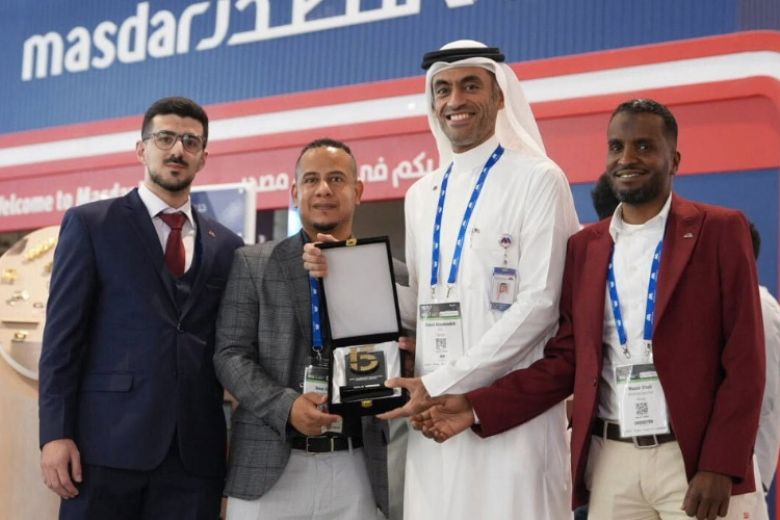
FAISAL AL MUHAIDEB: This year, we took the number one category in sustainable products at the Big 5 exhibition.
We have focused strongly on working with our suppliers, both locally and globally, to make sure we can meet the growing need for sustainable products.
For example, this year we achieved FSC certification for timber. That certification is important in terms of lower carbon and sustainability in cost.
In metals, we make sure our suppliers meet the relevant requirements, whether that involves LEED certification, ISO certification or other standards.
For fire performance, we hold UL certification and BS EN certification for doors and hardware. We make sure our products meet the required specifications.
SAUDI PROJECTS: What opportunities do you see for greater localization and the development of Saudi-based manufacturing and supply capabilities?
FAISAL AL MUHAIDEB: The Kingdom has many opportunities, particularly in products where alternatives can be produced in Saudi Arabia.
I will give two examples.
We are now seeing demand for fiberglass steel, which provides a replacement and alternative to conventional steel.
Second, we are seeing demand for alternatives to wooden pallets, with plastic pallets now becoming more widely used.
These two developments can help utilize Saudi Arabia’s own supply chain for fabrication and also create opportunities for export.
Localization is therefore not only about meeting domestic demand. It can also contribute to developing manufacturing capabilities within the Kingdom.
SAUDI PROJECTS: As CEO, what are your key strategic priorities for Masdar over the next three to five years?
FAISAL AL MUHAIDEB: There are three things we want to focus on day in and day out.
Number one is supporting the Kingdom’s Vision 2030 supply chain in building materials.
The second is enhancing the customer experience when shopping for building materials.
The third is localizing supply chains in the Kingdom.
These are the three priorities that remain at the heart of our strategy.
SAUDI PROJECTS: Looking ahead, how do you see Masdar contributing to the next phase of Saudi Arabia’s construction and economic transformation?
FAISAL AL MUHAIDEB: Masdar’s position as a leading building materials company in the Kingdom places a responsibility on us to contribute back to the country and to work closely with government on regulations that will help and ease the work of companies in this sector.
Regulation is important in helping to localize supply chains. That is something we continually work on, together with supply itself.
The second area is certification. Certification is important to make sure that materials coming into the Kingdom meet Saudi standards.
The third thing for us is making sure supply chains remain continuous.
Those areas, together with our work with customers, suppliers and government, will be important as Saudi Arabia moves into the next phase of its construction and economic transformation.
“Our goal today is to take building materials from trading into manufacturing.”
Faisal Al Muhaideb’s message is clear, as Saudi Arabia’s construction pipeline expands, the role of building materials suppliers is evolving beyond product distribution.
For Masdar, the next phase is centered on three interconnected priorities: supporting the Kingdom’s Vision 2030 construction supply chain, improving the customer experience and increasing localization.
The company is also looking toward greater manufacturing activity, sustainable product solutions and stronger domestic supply capabilities. Its focus on logistics, certification, supplier relationships and continuity of supply reflects the increasingly complex requirements of projects being delivered across the Kingdom.
Masdar’s presence at Big 5 Construct Saudi 2026 reinforced this approach, with the company showcasing its building materials portfolio, international brand partnerships and sustainability-oriented solutions, including Kronospan carbon-negative wood-based panels and engineered boards.
FOR MORE INFORMATION: