

Exploratory insights highlight prehistoric potential in northwestern Saudi Arabia.
Musaywin, a desert locality in northwestern Saudi Arabia, has recently drawn attention from researchers and observers monitoring the Kingdom’s expanding archaeological landscape. While still at an exploratory stage and not yet formally designated as a heritage site, Musaywin is being noted for its topographic and geological characteristics that align with other areas known to preserve evidence of early human activity.
Basalt landscapes often preserve traces of early human activity
Set within a landscape of basaltic plateaus, shallow depressions, and intermittent drainage channels, Musaywin reflects environmental conditions that once supported episodic human presence. Similar settings across the Arabian Peninsula have yielded surface lithics, seasonal water catchments, and temporary shelters associated with Paleolithic and early Holocene communities. Although no institutional survey or excavation has yet taken place at Musaywin, its physical context suggests potential relevance within broader studies of prehistoric mobility and environmental change.
Musaywin reflects broader archaeological momentum across the Kingdom
The growing interest in Musaywin mirrors a wider reassessment of Saudi Arabia’s archaeological resources. Over the past decade, large-scale surveys in AlUla, Tabuk, and across the volcanic fields of Harrat Khaybar and Harrat Uwayrid have transformed academic understanding of desert landscapes once considered marginal. These efforts have revealed extensive human adaptation, trade corridors, and monumental constructions, highlighting the Kingdom’s role in regional and intercontinental histories.
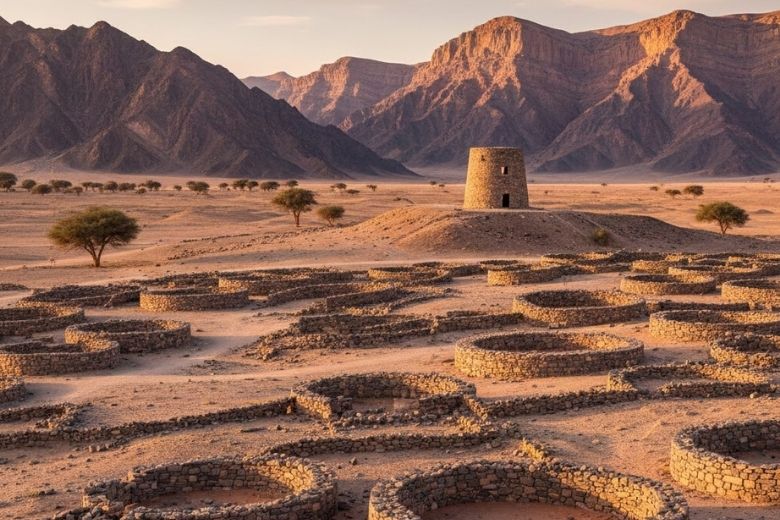
Within this framework, Musaywin is increasingly viewed as part of a network of under-documented localities that may contribute to future research agendas. Scholars emphasize that any interpretation remains preliminary until systematic fieldwork, environmental analysis, and archaeological documentation are undertaken. Caution is therefore central to current discussions, with researchers stressing the importance of evidence-based assessment before assigning formal significance.
Nonetheless, the attention surrounding Musaywin underscores the continued importance of archaeological exploration across Saudi Arabia. As new landscapes come into focus, sites like Musaywin serve as reminders that the desert still holds many untold stories awaiting careful study to better understand the human past of the Arabian Peninsula.