Saudi Arabia’s digital ambitions are reshaping next-generation data centre requirements.
Saudi Arabia’s ambitions in artificial intelligence, cloud computing and digital infrastructure are creating new requirements for the facilities that support them.
While power availability, connectivity and computing capacity remain central to data center development, another consideration is becoming increasingly important: how cooling infrastructure can be designed to support higher computing densities without compromising reliability or operational efficiency.
For developers and operators planning the next generation of facilities in the Kingdom, this requires a broader approach to cooling system design.
“Every part of the cooling architecture has an impact on performance and resilience,” explains Omar Allam, Regional Solutions Manager, GF MENAT. “It is not simply about the cooling technology selected, but how the complete system works together.”

Designing for scalability from the outset
As data centers accommodate increasingly demanding computing applications, cooling requirements are evolving.
High-density environments may require liquid cooling solutions that move heat away from processors through a network of interconnected systems.
These typically include the condenser water system (CWS), facility water system (FWS) and technology cooling system (TCS), each operating as a distinct closed loop.
Designing these systems requires consideration of material compatibility, installation quality, hydraulic performance and long-term maintenance.
Advanced polymer piping solutions support efficient, reliable data centre cooling
GF provides polymer piping solutions across the cooling architecture, including ecoFIT, ELGEF and COOL-FIT for condenser and facility water applications.
Their corrosion-free characteristics offer an alternative to metallic piping, while pre-insulated solutions can help simplify the design and installation of temperature-controlled distribution networks.
For Saudi projects, where data center infrastructure must support long-term digital growth, selecting appropriate systems from the outset can help address future operational and maintenance requirements.
Supporting the transition to direct liquid cooling
The move towards higher computing densities is also changing requirements inside the data hall.
Direct-to-chip cooling introduces fluid distribution closer to sensitive computing equipment, increasing the importance of coolant compatibility, cleanliness and reliable connections.
GF’s LiquidCore portfolio addresses this application through polymer piping solutions connecting coolant distribution units to cold plates.
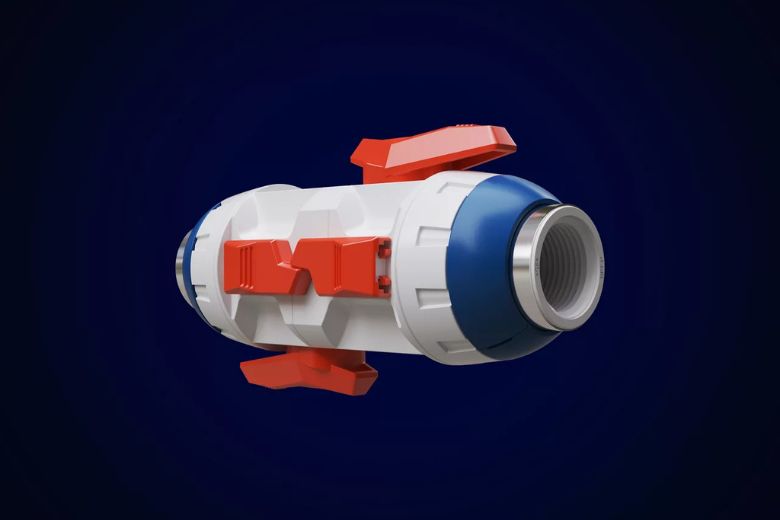
The portfolio includes PP-H materials suitable for deionised water and glycol-based coolants, alongside PVDF options for rack-level applications.
GF has also completed compatibility testing between its PROGEF PP-H system and Castrol ON PG 25 liquid-cooling fluid, supporting material selection considerations for direct-liquid-cooling environments.
As these systems become more widely adopted, installation practices will be just as important as material selection.
Local execution and lifecycle performance
For projects being developed at scale, prefabrication offers an opportunity to improve installation consistency while reducing the amount of work required in sensitive data center environments.
By completing assemblies off site, critical welds and connections can undergo quality checks and pressure testing before delivery. Digital traceability can also support documentation and quality assurance.
GF’s prefabrication capabilities in Saudi Arabia and the UAE allow this expertise to be delivered closer to regional projects, supporting coordination between engineering, manufacturing and installation teams.
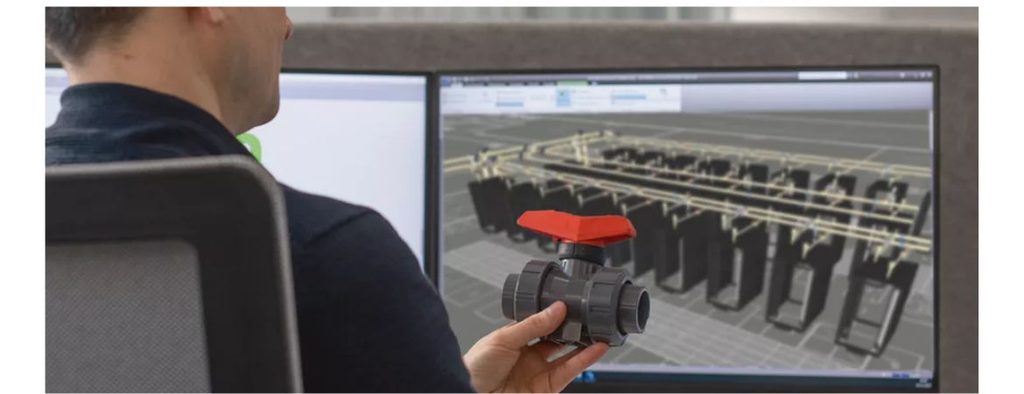
Beyond installation, the ability to monitor and maintain cooling systems remains essential.
Solutions such as GF’s Multi Control Valve, which integrates flow, temperature, energy and pressure sensing, can support operational visibility. Meanwhile, the Quick Connect Valve 700 is designed to facilitate spill-free maintenance at rack level.
Sustainability is another consideration. Environmental Product Declarations provide documented product information that can help project teams evaluate environmental impact alongside performance and lifecycle requirements.
Building for the next phase of digital growth
As Saudi Arabia continues developing its digital infrastructure, data center cooling systems will need to accommodate changing technologies, increasing computing demands and evolving operational expectations.
This makes early engineering decisions particularly important.
Material selection, system architecture, prefabrication, monitoring and maintenance must be considered as connected elements rather than separate technical requirements.
For Saudi Arabia’s next generation of data centers, scalability will depend not only on computing capacity, but on the infrastructure designed to keep it running.
FOR MORE INFORMATION: